Our Partner Universities
Explore world-class universities across the UK, Canada, USA, Australia and beyond — handpicked for quality and opportunity.
Showing 1–3 of 3 universities
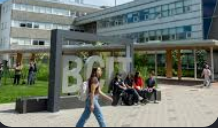
BRITISH COLUMBIA INSTITUTE OF TECHNOLOGY
British Columbia Institute of Technology (BCIT)
BCIT is in Canada, not the United Kingdom, so the student immigration process uses a Canadian study permit and Provincial Attestation Letter rather than a UK CAS.
Background and Location
The British Columbia Institute of Technology (BCIT) is a public polytechnic institute established in 1964 and operating under British Columbia’s College and Institute Act. Its main campus is in Burnaby (3700 Willingdon Avenue), in Metro Vancouver. Other campuses include the Downtown Campus in Vancouver, the Aerospace Technology Campus in Richmond, the Marine Campus in North Vancouver, and the Annacis Island Campus in Delta.
BCIT focuses on applied, career-oriented education rather than traditional research-university study. It offers certificates, diplomas, advanced diplomas, bachelor’s degrees and a smaller number of master’s programmes, plus apprenticeship and trades training. Fields include business and media, computing and information technology, engineering and electronics, construction and the environment, health sciences, energy, transportation (aerospace, marine and automotive), and applied sciences.
Many programmes use a full-time cohort model with fixed schedules; flexible (part-time or course-by-course) options also exist. International students attend from many countries and can access dedicated advising. Eligible programmes may qualify graduates to apply for Canada’s Post-Graduation Work Permit (PGWP).
Entry Requirements for International Students
Requirements are programme-specific and listed on each programme page. Official transcripts are required.
(i) Diploma, certificate and undergraduate (bachelor’s) entry
Applicants from Nigeria and Ghana normally present senior secondary results (WAEC/WASSCE or NECO) showing successful completion of upper secondary education (generally 12 years) together with the Grade 11/12-equivalent subjects required by the programme (often English, Mathematics and relevant sciences). Competitive grades are expected; many technology and business programmes look for solid passes (commonly C6 or better in key subjects, with higher marks preferred).
Prior post-secondary study (OND, HND, diploma or university credits) may be considered for advanced placement or top-up-style entry where the syllabus matches. Bachelor’s programmes may require a relevant diploma or specified post-secondary credits plus subject prerequisites.
(ii) Postgraduate / master’s programmes
These are limited in number. Applicants normally need a relevant bachelor’s degree or advanced diploma from a recognised institution, with a competitive average, plus any stated work experience or technical prerequisites. Credential assessment may be requested.
English language: Most programmes require demonstrated proficiency, commonly IELTS Academic 6.5 overall with no band below 5.5, TOEFL iBT 86 (no subscore below 20), or Duolingo 120 (no band below 95).
Exact scores vary by programme. English-medium secondary schooling in an approved context may be considered in some cases; otherwise a test or BCIT English upgrading (such as EPAS) is needed. Always confirm the programme page.
Mode of Application
International applicants apply online through the BCIT website for full-time cohort programmes open to international students. Steps normally include selecting an eligible programme, submitting the application with transcripts and supporting documents, paying any stated application fee, and responding to an offer.
After an offer, a non-refundable commitment fee of CAD $6,000 is required to secure the seat. Applicants then receive a Letter of Acceptance. For most study-permit applications from outside Canada, a Provincial Attestation Letter (PAL) from British Columbia is also required; BCIT advises accepted students on the PAL process. Intakes occur at different points in the year depending on the programme. Ademodupe Education can assist with programme selection, document preparation and submission. Programmes close when full, so early complete applications are advisable.
Fees (International Students)
Tuition is charged by term for full-time cohort programmes and varies by programme and year of entry.
Recent sample estimates for full diploma-length programmes often fall in the approximate range of CAD $45,000–$65,000 total (roughly CAD $20,000–$25,000+ per year depending on length and field), with computing, engineering and degree programmes frequently at the higher end. Ancillary, student-association and U-Pass transit fees are additional. Books and supplies are extra.
BCIT publishes multi-year international differential fee guidance (increases have been indicated in the region of up to 7% in some forward years) and provides a Tuition Estimator on its website for 2026/27 planning figures. Flexible Learning courses are typically charged at a multiple of the domestic per-credit rate. A CAD $6,000 commitment fee secures the seat after an offer and is applied toward tuition. Living costs in Metro Vancouver are relatively high; budget carefully beyond tuition. Exact figures must be taken from the current programme estimator or offer.
Study Permit Requirements (Canadian equivalent of visa documentation)
BCIT does not issue a UK-style CAS. International students normally need:
- A Letter of Acceptance from BCIT (a Designated Learning Institution).
- A Provincial Attestation Letter (PAL) where required under current Immigration, Refugees and Citizenship Canada (IRCC) rules.
- Proof of funds covering tuition and living expenses (IRCC sets minimum amounts that change periodically).
- A valid passport, biometrics, and an immigration medical examination from a panel physician when required.
- Payment of the study-permit application fee.
BCIT requires proof of a valid study permit naming the institute (or linked to it) before the programme start, typically at least seven days prior. Many BCIT programmes are PGWP-eligible; eligibility must be checked against current IRCC criteria and the specific programme before applying. Processing times from Nigeria and Ghana vary.
Rankings and Comparison
BCIT is a polytechnic and is not usually ranked in the main QS or Times Higher Education world university tables, which focus on research universities. In Canadian applied and student-outcome comparisons it is frequently recognised for graduate employment (provincial outcomes reports have cited employment rates around 90% or higher for diploma and certificate graduates) and co-op or work-integrated learning. It has appeared in CourseCompare lists among stronger Canadian options for international students and co-op.
Compared with large research universities in British Columbia (such as the University of British Columbia or Simon Fraser University), BCIT is more hands-on and industry-aligned, often shorter for diploma credentials, and more focused on immediate technical employment than on academic research rankings. Compared with UK universities previously profiled for Ademodupe Education applicants, BCIT offers a Canadian pathway with potential PGWP work rights after eligible programmes, but living costs in Vancouver are higher than in many UK regional cities and the credential mix emphasises diplomas and applied degrees.
Specialties and Why Applicants from Nigeria and Ghana Should Consider It
Strengths include aerospace maintenance and technology, civil and mechanical engineering technology, computing and cybersecurity, construction and building science, business and supply-chain management, health technologies, marine studies, and skilled trades. Learning is practical, with workshops, labs, aircraft and industry-standard equipment, and many programmes include co-op or work experience.
Reasons for West African applicants include clear applied routes that value WAEC/WASSCE alongside required subject grades, a strong employment focus valued by Canadian employers, eligibility of many programmes for the Post-Graduation Work Permit, multiple campus specialisations in a major Pacific gateway city, and the possibility of progressing from diploma to degree. Metro Vancouver offers diverse communities and industry links in technology, aerospace, construction and trade. Applicants should confirm current PGWP rules, PAL requirements and programme availability. Ademodupe Education can help match profiles to suitable BCIT credentials and prepare the study-permit file.
All fees, entry grades, English scores, commitment-fee rules, PAL requirements and PGWP eligibility should be verified on the official BCIT and IRCC websites before publication or counselling, as they change. Ademodupe Education applicants should confirm the latest programme pages and immigration instructions directly or through their adviser.

BROCK UNIVERITY
Brock University, Canada – Study Abroad Guide for Applicants from Nigeria, Ghana and West Africa
Brock University is in Canada, so entry uses a Canadian study permit and, where required, a Provincial Attestation Letter (PAL), not a UK CAS as we have with Schools in the UK.
Background and Location
Brock University is a public comprehensive university founded in 1964 and named after Major-General Sir Isaac Brock. The main campus is at 1812 Sir Isaac Brock Way, St. Catharines, in Ontario’s Niagara Region. The campus sits in a UNESCO Biosphere Reserve on the Niagara Escarpment, about 20 minutes from Niagara Falls, roughly 90 minutes from Toronto, and within reach of the U.S. border at Buffalo.
It enrols more than 19,000 students, including learners from over 110 countries. Faculties include Applied Health Sciences, Education, Humanities, Mathematics and Science, Social Sciences, and the Goodman School of Business. The university offers more than 70 undergraduate and more than 50 graduate programmes. Teaching emphasises experiential learning, co-op and community engagement. International students receive pre-arrival, orientation, immigration and settlement support through Brock International.
Entry Requirements for International Students
Meeting the minimum credential does not guarantee admission. Programme prerequisites and competitive averages also apply.
(i) Undergraduate programmes
Applicants from West Africa are considered with the Senior School Certificate from WAEC (WASSCE) or NECO.
- Nigeria: a minimum of 8 subjects.
- Ghana: a minimum of 6 subjects.
A minimum overall average of C4 is required for admission consideration. Specific subjects (for example Mathematics, Biology, Chemistry or Physics) must match programme prerequisites at the senior level. Competitive averages are often higher than the minimum, especially in business, sport management, sciences and engineering.
(ii) Postgraduate programmes
Master’s applicants normally need a four-year bachelor’s degree, or equivalent, from an accredited university with a minimum average of about 75% (mid-B) over the last two years of full-time study. Doctoral applicants normally need a relevant master’s degree with a higher average (often around 80%). Professional programmes such as the International MBA may set additional requirements. Individual programmes can ask for higher grades, work experience or a research proposal.
English language: Undergraduate applicants commonly need IELTS Academic 6.5 (confirm current band minimums),
TOEFL iBT around 88, or an accepted equivalent such as PTE or CAEL.
Graduate applicants typically need IELTS Academic 6.5 with no band below 6.0, or TOEFL iBT 88 with no subtest below 21. Tests are usually valid for two years. Exemptions may apply after sufficient English-medium post-secondary study. Brock also offers an Intensive English Language Program pathway.
Mode of Application
International undergraduate applicants apply online through Brock’s application system or, where applicable, the Ontario Universities’ Application Centre (OUAC). Graduate applicants apply through the Faculty of Graduate Studies portal.
Applicants report all secondary and post-secondary study, upload transcripts and supporting documents, and pay a non-refundable application fee. After an offer, students accept it in the student portal and pay a tuition deposit to confirm the place. Official final documents must later be sent directly from the issuing authority. Early application is recommended; many undergraduate programmes use a mid-January equal-consideration style deadline, and popular programmes can fill. Ademodupe Education can assist with programme choice, document preparation and submission.
Fees (International Students)
Figures are in Canadian dollars and change by year of entry. For 2025 entry, published international undergraduate flat fees were approximately:
- Arts and sciences: about CAD $39,835 per year.
- Business, sport management and computer science: about CAD $41,646 per year.
- Engineering: about CAD $40,741 per year.
Ancillary fees and a Province of Ontario International Recovery Fee (CAD $750 in recent schedules) are additional. Rates for a first degree are often held for up to five years for students who enter in a given cohort.
Graduate research programmes (many MA, MSc and PhD routes) have been charged on a per-term basis for international students (recent schedules showed roughly CAD $6,700+ per term plus the recovery fee). Professional programmes such as the International Master of Professional Accountancy or International MBA are substantially higher and are priced per programme.
Automatic International Brock Scholars awards are available to eligible first-year undergraduates based on admission average (examples in recent terms ranged from several thousand dollars up to CAD $20,000 in year one for the highest averages, with smaller renewals). Other awards exist. Exact fees and scholarships must be confirmed on the Student Accounts pages before counselling.
Canadian Immigration Requirements for Student Entry
Most applicants from outside Canada need:
- A Letter of Acceptance from Brock (a Designated Learning Institution).
- A Provincial Attestation Letter (PAL) from Ontario where IRCC rules require one; the university advises accepted students on the process.
- Proof of funds for tuition and living costs meeting current IRCC minimums.
- A valid passport, biometrics, and an immigration medical examination when required.
- Payment of the study-permit fee.
Study permits are applied for through Immigration, Refugees and Citizenship Canada. Processing times from Nigeria and Ghana vary. After an eligible degree, graduates may apply for a Post-Graduation Work Permit (PGWP); eligibility depends on programme length and current IRCC rules and should be checked before enrolment.
Rankings and Comparison
In Maclean’s national reputation survey, Brock has appeared around the high 20s overall. In the comprehensive-university category of Maclean’s rankings it has placed in the teens (around 13th in one recent comprehensive table). It is not in the top tier of research-intensive universities such as Toronto, UBC, McGill or Waterloo. The university highlights strong student-satisfaction results in Ontario, AACSB accreditation for the Goodman School of Business (placing it among a minority of business schools worldwide), and past international recognition for sport-related programmes. Graduate employment outcomes are reported as high.
Compared with larger Ontario research universities, Brock is more mid-sized, often more accessible on grades, and stronger on experiential and co-op learning than on pure research volume. Living costs in St. Catharines are generally lower than in Toronto or Vancouver. Compared with UK options previously profiled for Ademodupe Education clients, Brock offers a Canadian degree pathway with potential PGWP work rights after eligible study.
Specialties and Why Applicants from Nigeria and Africa Should Consider BROCK:
Notable areas include sport management and kinesiology, business (AACSB-accredited Goodman School), education, biological sciences and health, computer science, integrated engineering, and environmental and tourism-related study linked to the Niagara region. Co-op and field placements are widely available.
Reasons for West African applicants include published WAEC/NECO rules (with clear subject counts for Nigeria and Ghana), grade-based entrance scholarships, a supportive international office, a campus that is large enough for facilities yet smaller than major-city universities, and a location near Niagara Falls with good links to Toronto. Many programmes can lead toward Canadian work experience after graduation if PGWP rules are met. Applicants should confirm current averages, English scores, deposit amounts and immigration rules. Ademodupe Education can help match profiles to programmes and prepare the study-permit file.
Why Brock University for Nigerian Students?
Nigerian applicants are considered on published West African rules rather than a vague “international” category. Brock accepts the WAEC (WASSCE) or NECO Senior School Certificate and states a Nigeria-specific minimum of eight subjects, with an overall average of at least C4 for admission consideration. Senior-level subjects must still match the programme (for example Mathematics and sciences for business, computing, health or engineering routes). Competitive programmes often need stronger grades than the published minimum, so early subject planning matters.
Postgraduate entry is based on a recognised bachelor’s degree, normally a four-year degree with a minimum average around 75% (mid-B) over the last two years for a master’s, and a higher average for doctoral study. A second-class degree from a recognised Nigerian university can be assessed for equivalency; professional programmes may ask for additional experience.
English is assessed separately in most cases. Typical scores are IELTS Academic 6.5 for undergraduate entry and IELTS 6.5 with no band below 6.0 for many graduate programmes (or accepted TOEFL, PTE or CAEL equivalents). Applicants who have not met the score can use Brock’s Intensive English Language Program as a pathway.
Cost and funding are clearer than at many larger Canadian universities. Recent international undergraduate tuition has sat around CAD $40,000–$42,000 per year depending on faculty, plus ancillary fees and a small Ontario international recovery fee. St. Catharines living costs are generally lower than Toronto or Vancouver. Eligible first-year undergraduates are automatically considered for the International Brock Scholars award, which is tied to admission average and can be substantial in year one, with smaller renewals if grades are maintained.
Practical advantages for Nigerian students include co-op and field placements with thousands of employer partners, AACSB-accredited business degrees at the Goodman School of Business, and strong applied areas such as sport management, kinesiology, education and computer science. The campus is mid-sized (about 19,000 students) with a dedicated international office for pre-arrival, immigration and settlement support. After an eligible programme, graduates can apply for Canada’s Post-Graduation Work Permit under current IRCC rules.
Immigration follows the standard Canadian route: Letter of Acceptance, Provincial Attestation Letter where required, proof of funds, biometrics and a study permit. Ademodupe Education can align WAEC subject choices, predicted grades, English scores and the deposit timeline with Brock’s offer and study-permit steps.
.Brock University offers more than 70 undergraduate and more than 50 graduate programmes across seven faculties. Availability for international applicants, co-op, and intake can change, so confirm the live list on brocku.ca or through Ademodupe Education before further counselling.
(i) Undergraduate programmes
Goodman School of Business
- Bachelor of Business Administration (BBA), including co-op and an international double degree
- Bachelor of Accounting (BAcc)
- Bachelor of Business Economics (BBE)
- Computing and Business (BCB)
Faculty of Applied Health Sciences
- Kinesiology
- Physical Education
- Sport Management
- Nursing
- Public Health
- Medical Sciences
- Biomedical Sciences
- Child Health (BCH)
- Community Health
- Applied Health
- Recreation and Leisure Studies
Faculty of Mathematics and Science
- Biological Sciences
- Biochemistry
- Biotechnology
- Biomedical Sciences (Honours)
- Biophysics (Honours)
- Chemistry
- Computer Science
- Computing and Network Communications (co-op)
- Data Sciences and Analytics
- Earth Sciences
- Applied Grape and Wine Science (Oenology and Viticulture)
- Mathematics and Statistics
- Neuroscience
- Physics
- Engineering (BEng), including Integrated Engineering
- Earth and Planetary Science Communication
Faculty of Social Sciences
- Child and Youth Studies
- Critical Criminology
- Economics
- Geography
- Political Science
- Psychology
- Sociology
- Labour Studies
- Social Sciences
- Women’s and Gender Studies
- Business Communications (shared with business routes)
Faculty of Humanities
- English Language and Literature
- History
- Philosophy
- Classics and Archaeology
- Dramatic Arts
- Music
- Visual Arts
- Modern Languages, including Hispanic and Latin American Studies
- Canadian Studies
- Applied Linguistics
- Studies in Arts and Culture
- Interactive Arts and Science
- Media and Communication
- Game Design
Faculty of Education
- Concurrent Teacher Education (Primary/Junior, Junior/Intermediate, and Intermediate/Senior)
- Early Childhood Education (BECE)
- Educational Studies
- Adult Education
- Indigenous Educational Studies
Many degrees are offered as a three-year pass or a four-year honours degree. Co-op is available on a large number of programmes, including business, science and some social-science routes.
(ii) Postgraduate programmes
Master’s
- Master of Accountancy (MAcc), co-op option
- Master of Professional Accounting
- Master of Business Administration (MBA), full-time and part-time, co-op option
- Master of Business Economics (MBE)
- Master of Science in Management
- Master of Arts in Applied Linguistics, including a TESL stream
- Master of Arts in Child and Youth Studies
- Master of Arts in Classics
- Master of Arts in Critical Sociology
- Master of Arts in English
- Master of Arts in Game Studies
- Master of Arts in Geography
- Master of Arts in History
- Master of Arts in Philosophy
- Master of Arts in Political Science
- Master of Arts in Psychology
- Master of Arts in Social Justice and Equity Studies
- Master of Arts in Sport Management
- Master of Applied Disability Studies (MADS and MA)
- Master of Applied Gerontology
- Master of Arts and Master of Science in Applied Health Sciences
- Master of Athletic Therapy
- Master of Professional Kinesiology
- Master of Public Health
- Master of Science in Kinesiology
- Master of Sport Management
- Master of Education (MEd)
- Concurrent Bachelor of Nursing / Master of Nursing
- Master of Science in Biological Sciences
- Master of Science in Biotechnology
- Master of Science in Chemistry
- Master of Science in Computer Science
- Master of Science in Earth Sciences
- Master of Science in Mathematics and Statistics
- Master of Science in Physics
- Master of Science in Materials Physics (international pathway)
- Master of Sustainability (course, major research paper with co-op, or thesis)
Doctoral
- PhD in Applied Behaviour Analysis
- PhD in Applied Health Sciences
- PhD in Biological Sciences
- PhD in Biotechnology
- PhD in Chemistry
- PhD in Child and Youth Studies
- PhD in Educational Studies
- PhD in Intelligent Systems and Data Science
- PhD in Interdisciplinary Humanities
- PhD in Physics
- PhD in Psychology
- PhD in Sustainability Science
Graduate diplomas are also offered in selected fields. Some master’s and PhD intakes close when full, so an international applicant should check the current OUAC or Brock graduate listing before applying.
All fees, grade averages, English scores, deposit rules, PAL requirements and PGWP eligibility should be verified on the official Brock University and IRCC websites before publication or counselling, as they are updated regularly.

ONTARIO TECH UNIVERSITY
Ontario Tech University, Canada – Study Abroad Guide for Applicants from Nigeria, Ghana and West Africa
Background and Location
Ontario Tech University is a public university in Oshawa, Ontario, about 60 kilometres east of Toronto. It was founded in 2002 as the University of Ontario Institute of Technology and later took the name Ontario Tech. It is a technology-focused teaching and research university, smaller than the large Toronto research universities, with about 10,000 students and a growing international community. Learning is applied, with co-op on many engineering, commerce and information-technology degrees and links to more than 500 industry partners.
.Entry Requirements for International Students
Applicants from Nigeria, Ghana, Liberia, Sierra Leone and The Gambia must present the Senior School Certificate from WAEC or NECO, including all senior-secondary years and any mock results. Official WAEC results should be shared electronically with admissions@ontariotechu.ca. Admission is competitive and depends on the overall average and the subjects required for the programme. Engineering, science and computing normally need strong Mathematics and science grades. A GCE route is also accepted: at least five IGCSE or O-level subjects and two A-levels, with a minimum of C, and Mathematics and science prerequisites at A-level where required.
A recognised four-year bachelor’s degree is normally required. Research master’s and doctoral programmes look for a strong average, often a B+ or higher in the relevant field, plus a research interest that matches a supervisor. Course-based master’s programmes such as the Master of Engineering, Master of Education and Master of Business Analytics and AI are assessed on the degree, grades and any stated work experience. Some files may be asked for a World Education Services evaluation.English language: IELTS Academic 6.5 with no band below 6.0 is the common standard. Education and Nursing ask for IELTS 7.0. Other accepted tests include TOEFL, PTE Academic 58, CAEL 70 and Duolingo 120, or 130 for Education and Nursing.
Undergraduate applicants who are applying only to Ontario Tech can use the university’s international application and choose up to three programmes for a CAD $100 fee. Applicants to more than one Ontario university use the Ontario Universities’ Application Centre: a base fee of about CAD $166 for up to three choices, then about CAD $50 for each extra choice. Transcripts must come from the school or examination body. Graduate applicants apply through the School of Graduate and Postdoctoral Studies. The main intake is September; some programmes also have January entry.
International undergraduate tuition for 2025–26, from the university fact book, is about CAD $33,154 a year for most Bachelor of Arts, Science and Health Science degrees, CAD $36,730 for Computer Science, CAD $36,774 for Commerce, CAD $40,916 for Information Technology, and CAD $45,205 for Engineering. Ancillary fees are extra. Graduate tuition for 2026–27 is charged by programme. Flat-fee research programmes include a PhD at CAD $19,166 a year, a Doctor of Education at CAD $20,113, and most Master of Science, Health Sciences and Criminology routes at CAD $20,124. A Master of Applied Science is CAD $22,313. Course-based degrees are charged per credit: a 30-credit Master of Education is about CAD $31,600 in total at CAD $3,163.34 per 3-credit course, while a Master of Engineering is about CAD $46,900 and a Master of Business Analytics and AI about CAD $54,700. Fees rise by year of entry.Immigration Requirements
Most applicants need a Letter of Acceptance from Ontario Tech, a Designated Learning Institution, and a study permit from Immigration, Refugees and Citizenship Canada. A Provincial Attestation Letter is required for many undergraduate applications under the current student cap. Many master’s and doctoral applicants are exempt, but the rule must be checked on the offer. Nigerian applicants also complete biometrics and an immigration medical examination with a panel physician. Proof of funds must cover unpaid tuition, living costs and travel.
Ontario Tech is a young university and is not in the top tier of Canadian research rankings. Independent research rankings have placed it around 40th in Canada, with a clear subject strength in nuclear engineering, energy systems, automotive engineering and related technology fields.
The distinctive areas are nuclear engineering, energy systems, automotive, mechanical, mechatronics, electrical, software and manufacturing engineering, computer science, game development, networking and IT security, health science, medical laboratory science, forensic science, and commerce with co-op.
Courses and Duration Undergraduate, normally four years, or five with co-op
- Bachelor of Arts: Communication and Digital Media Studies; Criminology and Justice; Educational Studies; Forensic Psychology; Legal Studies; Liberal Studies; Political Science; Psychology
- Bachelor of Commerce: Accounting; Commerce; Entrepreneurship; Finance; Marketing; Organizational Behaviour and Human Resources Management; Technology Management
- Bachelor of Engineering: Automotive; Electrical; Energy; Industrial; Manufacturing; Mechanical; Mechatronics; Nuclear; Software
- Bachelor of Engineering and Management in the same engineering fields
- Bachelor of Information Technology: Game Development and Interactive Media; Networking and IT Security; Technology Management
- Bachelor of Science: Applied and Industrial Mathematics; Biological Science; Computer Science; Forensic Science; Physics; Chemistry; Environmental and related science routes
- Bachelor of Health Science, including Kinesiology and Medical Laboratory Science
- Bachelor of Health Administration
- Bachelor of Science in Nursing
- Bachelor of Education, Primary/Junior and Intermediate/Senior
- Bachelor of Allied Health Sciences
Postgraduate
Taught or course-based, usually one to two years: Master of Engineering; Master of Engineering Management; Master of Business Analytics and AI; Master of Financial Data Analytics; Master of Information Technology Security; Master of Education; Master of Arts in Education; Master of Social Media Communication; graduate diplomas in Accounting, Engineering Management, Nuclear Design Engineering and Nuclear Technology. Research-oriented, usually two years for a master’s and four years for a doctorate: Master of Applied Science; Master of Science; Master of Health Sciences; Master of Arts in Criminology; Master of Social Practice and Innovation; Doctor of Philosophy; Doctor of Education.
|
Item
|
Amount
|
Paid to
|
Notes
|
|---|---|---|---|
|
Undergraduate application, Ontario Tech only
|
$100
|
University
|
Up to three programme choices
|
|
Undergraduate application through OUAC
|
About $166, then $50 per extra choice
|
OUAC
|
Use if applying to more than one Ontario university
|
|
Graduate application
|
Check the current graduate fee
|
University
|
Non-refundable
|
|
English test, if required
|
About $300–$350
|
Test centre
|
IELTS, PTE or equivalent
|
|
Tuition deposit after offer
|
Often from about $2,000; confirm the offer
|
University
|
Applied to tuition; needed for the final Letter of Acceptance
|
|
Undergraduate tuition, year 1
|
$33,154–$45,205
|
University
|
2025–26 international rates; ancillary fees extra
|
|
Research master’s or PhD tuition
|
About $19,166–$22,313 a year
|
University
|
2026–27 flat fees; charged over three terms
|
|
Course-based master’s
|
About $31,600–$54,700 for 30 credits
|
University
|
Depends on the programme
|
|
Study permit fee
|
$150
|
IRCC
|
Non-refundable
|
|
Biometrics
|
$85
|
IRCC
|
Lagos or Abuja visa application centre
|
|
Immigration medical examination
|
Varies in naira; often about ₦100,000–₦150,000
|
Panel physician in Nigeria
|
Not an IRCC fee
|
|
Living-cost funds to show
|
$23,448 for one student
|
Shown to IRCC, not paid to the university
|
Applies to applications from 1 September 2026; tuition is extra
|
|
Return travel estimate used in budgeting
|
About $2,000
|
Airline
|
Not a visa fee
|
Fees are in Canadian dollars and exclude ancillary fees, health insurance, books and living costs. Undergraduate figures are the 2025–26 international tuition rates from the university fact book. Graduate flat fees are the 2026–27 published rates. Course-based graduate totals assume the usual 30 credits. Co-op adds a year and co-op fees. Confirm the current calculator before an offer is made.
Undergraduate degrees
Most honours degrees take four years. Co-op versions take five years. Nursing is normally four years. A Bachelor of Education after a first degree is shorter than a direct four-year route.
| Programme | Annual international tuition | Duration |
|---|---|---|
| Bachelor of Arts: Communication and Digital Media Studies; Criminology and Justice; Educational Studies; Forensic Psychology; Legal Studies; Liberal Studies; Political Science; Psychology | $33,154 | 4 years; co-op or bridge routes may be 5 |
| Bachelor of Science: Applied and Industrial Mathematics; Biological Science; Chemistry; Forensic Science; Physics; Environmental and related science routes; Psychology (BSc) | $33,154 | 4 years; co-op 5 where offered |
| Bachelor of Science and Management in non-computing science fields | $33,154 | 4 or 5 years |
| Bachelor of Health Science, including Comprehensive and Kinesiology | $33,154 | 4 years |
| Bachelor of Allied Health Sciences | $33,154 | 4 years, often an advanced-entry route |
| Bachelor of Education, Primary/Junior or Intermediate/Senior | $33,154 | Usually 16 months to 2 years after a first degree; confirm the route |
| Computer Science, BSc | $36,730 | 4 years; co-op 5 years |
| Integrated Mathematics and Computer Science | $36,730 | 4 years; co-op 5 years |
| Nursing, BScN | $33,807 | 4 years |
| Health Administration | $33,807 | 4 years |
| Bachelor of Commerce: Accounting; Commerce; Entrepreneurship; Finance; Marketing; Organizational Behaviour and Human Resources; Technology Management; Cybersecurity for Business | $36,774 | 4 years; co-op 5 years |
| Bachelor of Information Technology: Game Development and Interactive Media; Networking and IT Security; Technology Management | $40,916 | 4 years; co-op 5 years |
| Bachelor of Engineering: Automotive; Electrical; Energy; Industrial; Manufacturing; Mechanical; Mechatronics; Nuclear; Software; Comprehensive first year | $45,205 | 4 years; co-op 5 years |
| Bachelor of Engineering and Management in the same engineering fields | $45,205 | 4 or 5 years; co-op 5 years |
Graduate programmes
Research students pay every term, including summer, unless on an approved leave.
| Programme | International fee | Duration |
|---|---|---|
| Doctor of Philosophy | $19,166 a year | Normally 4 years |
| Doctor of Education | $20,113 a year | Normally 3 to 4 years |
| Master of Arts in Criminology | $20,124 a year | Normally 2 years |
| Master of Social Practice and Innovation | $20,124 a year | Normally 2 years |
| Master of Health Sciences | $20,124 a year | Normally 2 years |
| Master of Science, including Computer Science | $20,124 a year | Normally 2 years |
| Master of Science in Nursing | $26,900 a year on the 2025–26 schedule | Normally 2 years |
| Master of Applied Science | $22,313 a year | Normally 2 years |
| Master of Education | $3,163.34 per 3-credit course; about $31,633 for 30 credits | 1 to 2 years |
| Master of Arts in Education | $3,163.34 per 3-credit course; about $31,633 for 30 credits | 1 to 2 years |
| Master of Social Media Communication in Online Creators | $3,136.34 per 3-credit course; about $31,363 for 30 credits | 1 to 2 years |
| Master of Engineering | $4,693.57 per 3-credit course; about $46,936 for 30 credits | 1 to 2 years |
| Master of Engineering Management | $4,693.57 per 3-credit course; about $46,936 for 30 credits | 1 to 2 years |
| Master of Information Technology Security | $4,834.52 per 3-credit course; about $48,345 for 30 credits | 1 to 2 years |
| Master of Business Analytics and AI | $5,469.78 per 3-credit course; about $54,698 for 30 credits | 1 to 2 years |
| Master of Financial Data Analytics | $5,469.78 per 3-credit course; about $54,698 for 30 credits | 1 to 2 years |
Graduate diplomas
| Programme | International fee | Duration |
|---|---|---|
| Diploma in Accounting | $15,440 on the 2025–26 schedule | Usually 1 year |
| Diploma in Nuclear Technology | $22,350 on the 2025–26 schedule | Usually 1 year |
| Diploma in Engineering Management | $22,350 on the 2025–26 schedule | Usually 1 year |
| Diploma in Nuclear Design Engineering | $22,350 on the 2025–26 schedule | Usually 1 year |
| Education in the Digital Age, Police Leadership, and Work Disability Prevention diplomas | Charged per course, near the Master of Education rate | Usually under 1 year |
The Master of Applied Science, Master of Science, Master of Health Sciences, Master of Arts in Criminology, Master of Social Practice and Innovation, PhD and EdD are research-oriented. The Master of Engineering, Education, Business Analytics, Financial Data Analytics and Information Technology Security routes are course-based. Ancillary fees and the university health plan are added to every table above.
Not Sure Which University Is Right for You?
Our counselors will match you to the best universities based on your profile, goals, and budget — completely free.